Automotive Lubricant Companies: What to Look for in a Reliable Lubricant Manufacturer
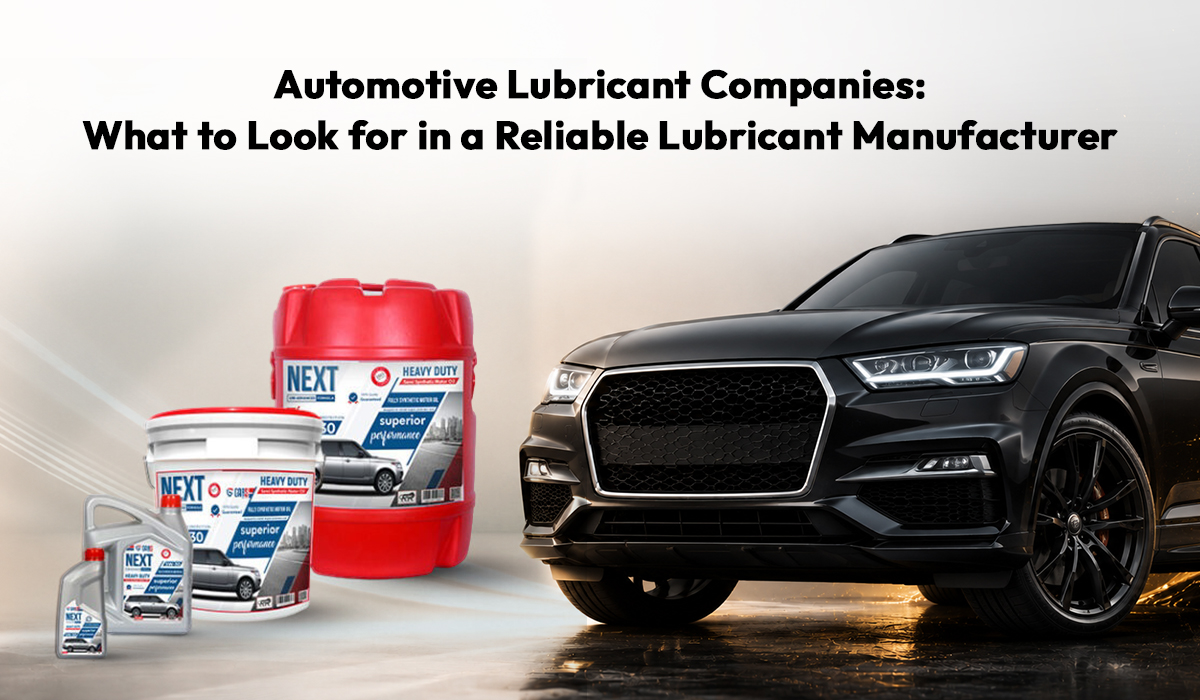
Automotive Lubricant Companies: What to Look for in a Reliable Lubricant Manufacturer
What Every Business Should Know Before Choosing an Automotive Lubricant Company
Choosing among automotive lubricant companies is one of the more consequential decisions a business makes - and one that does not always get the attention it deserves. For automotive workshops, fleet operators, distributors, and industrial buyers, the manufacturer behind the lubricant supply affects product performance, supply reliability, and ultimately the condition of the equipment or vehicles running on it.There is a meaningful difference between simply purchasing lubricant and building a relationship with a manufacturing partner who understands your requirements, maintains consistent quality, and supports your business as it grows. This guide covers what to evaluate, what questions to ask, and what a reliable automotive lubricant manufacturer actually looks like in practice.
What Automotive Lubricant Companies Actually Manufacture
Automotive lubricant companies cover a broader product range than most buyers realise when they first start sourcing. A manufacturer with genuine production depth typically supplies:| Product | Main Application |
| Engine Oil | Engine lubrication and protection across petrol, diesel, and two-wheeler applications |
| Gear Oil | Gear and transmission component lubrication under high load |
| Grease | Bearings, chassis components, and moving parts requiring sustained lubrication |
| Brake Fluid | Hydraulic braking systems across automotive and commercial vehicle applications |
| Coolant | Engine cooling systems - prevents overheating and corrosion |
| Transmission Fluid | Automatic and manual transmission and drivetrain systems |
Need a Manufacturer who covers your full Lubricant Range?
Why the Manufacturer You Choose Has a Direct Business Impact
The choice of automotive lubricant manufacturer is not just a procurement decision - it runs through every part of a lubricant business's operation: Consistent product quality workshops and fleet operators need the same performance from the tenth delivery as the first. Batch variation creates unpredictable results in customer engines - and the complaints land with the distributor, not the manufacturer. Engine and component protection formulation quality and raw material standards cannot be verified by looking at the bottle. API certification and documented batch testing are the practical ways of confirming what is inside matches what is claimed on the label. Supply reliability a manufacturer who cannot consistently fulfil repeat orders forces distributors into stock gaps at exactly the moments when customer demand is highest. Long-term relationships manufacturers who understand your market, support your growth, and stay engaged after the first order are worth considerably more than the marginal saving from switching suppliers for a better price on one batch.Seven Factors Worth Evaluating Before Committing to an Automotive Lubricant Company
1. Product Range
A manufacturer with a broad product portfolio removes the need to manage multiple supply relationships. For businesses building a lubricant distributorship business India or regional supply operation, the ability to source engine oils, gear oils, greases, brake fluids, coolants, and transmission fluids from one manufacturer simplifies logistics, reduces administrative complexity, and keeps quality consistent across the full product range.2. Product Quality and Consistency
Raw material quality sets the ceiling on what the finished product can deliver. A manufacturer using premium base oils and balanced additive packages produces oil that holds its properties through the service interval it was sold on. Batch-to-batch consistency - confirmed through documented testing rather than assumed - is what gives distributors and fleet operators confidence that the product behaves the same way every time it arrives3. Manufacturing Capabilities
The facilities behind the product matter as much as the product itself. Calibrated blending equipment, adequate production capacity, and a quality control process that runs throughout production - not just at the end of it - are the infrastructure that consistent quality actually requires. A manufacturer who cannot show you their facility or documentation when asked is telling you something important.4. Technical Expertise and R&D
Vehicle specifications change. Operating conditions vary. A manufacturer with genuine formulation development capability can adapt to those requirements rather than selling the same product regardless of whether it fits. For buyers with specific OEM requirements or applications in demanding climates, technical depth is the difference between a product that works and one that looks right on paper but falls short in the field.5. Supply Capacity and Delivery Reliability
The first bulk order tells you very little. The third one - when the novelty of a new supply relationship has worn off and the manufacturer is managing multiple clients - tells you everything. Before committing, ask specifically what their production capacity looks like against your expected volumes, how long a standard repeat order takes from confirmation to delivery, and what their process is when demand from multiple clients spikes at the same time. These are not uncomfortable questions - they are the ones a reliable manufacturer will answer without hesitation.6. OEM, Private Label and Customisation Support
Businesses building their own lubricant brand or working with customers who have specific application requirements need more than a product catalogue. They need a manufacturer who can develop custom formulations, manufacture under a private label, and produce packaging that reflects the buyer's brand rather than the manufacturer's. That capability - OEM approvals, custom blending, proprietary formulation development - is what turns a product supplier into an actual manufacturing partner. If that matters to your business, confirm it is available before the relationship starts rather than discovering it is not six months in.7. Competitive Pricing and Value
Price is easy to compare on a spreadsheet. What does not show up on a spreadsheet is whether the quality holds on the sixth batch, whether someone picks up the phone six months in, or whether supply stays reliable when your volumes increase. Those things matter more than the number on the first invoice.How to Evaluate an Automotive Lubricant Manufacturer Before Buying
Going through this checklist before committing saves the kind of problems that only show up after the third or fourth order:- Get the full product portfolio in front of you and check it actually covers everything your business needs - do not assume
- Ask for API certification documentation for the specific grades you plan to source, not a general company certification
- Request recent batch test reports - not the ones prepared for the sales meeting, but the ones from regular production runs
- Confirm ISO 9001 certification or equivalent - and ask how often audits are conducted
- Put your expected order volumes on the table and ask directly whether their production capacity can handle them consistently
- Talk through packaging formats, minimum quantities, and realistic lead times for repeat orders before you place the first one
- Find out who you call after purchase when a technical question comes up - and whether that person actually exists.
- If private label or OEM manufacturing is part of your plan, have that conversation at the beginning rather than after you are already committed
Why GARS Lubricants Works as an Automotive Lubricant Manufacturing Partner
GARS Lubricants is one of the established engine oil manufacturers in India - manufacturing engine oils, gear oils, greases, brake fluids, coolants, and specialty lubricants from a production facility in Surat, Gujarat for domestic distribution and international export.Every production batch goes through in-house laboratory testing before dispatch. The technical team develops and maintains formulations built around real application requirements - not minimum specification compliance. Quality control runs at every stage of production rather than only at the point of final packaging.
For businesses looking to build or expand a lubricant supply operation, GARS offers OEM manufacturing services and private label support - covering custom formulations, branded packaging, and technical documentation. Distributors and wholesale buyers source a complete lubricant portfolio from one manufacturer rather than splitting requirements across multiple supply relationships.
For more on building a lubricant business with a manufacturing partner, see our guide on lubricant distributorship business India - and explore the full GARS product range at garslubricants.com.
Conclusion
The decision between automotive lubricant companies is not one that should rest on a competitive quote and a product sample. The manufacturer behind your lubricant supply affects product consistency, supply reliability, technical support, and ultimately the performance of the vehicles and equipment your customers depend on.Evaluate manufacturers on what they can document - certifications, batch test reports, production capacity, and technical capability - rather than what they claim. The supply relationships worth building long term are the ones where quality holds on the hundredth order as reliably as it did on the first.
For a manufacturing partner who treats production quality as the operating standard, explore the GARS Lubricants product range at garslubricants.com.
FAQ's
What are automotive lubricant companies?
Automotive lubricant companies manufacture and supply lubricants for vehicles and machinery - engine oils, gear oils, greases, brake fluids, coolants, and transmission fluids. Some operate purely as manufacturers while others combine manufacturing with distribution. The distinction matters because quality control only exists where production actually happens.What products do automotive lubricant manufacturers produce?
A full-range automotive lubricant manufacturer produces engine oils across petrol, diesel, and two-wheeler grades, gear and transmission oils, multipurpose and specialty greases, brake fluids, engine coolants, and industrial lubricants. The breadth of that range reflects genuine manufacturing depth rather than a catalogue built on sourced product.How do I choose a reliable automotive lubricant company?
Get their API certification and recent batch test reports before anything else. Have a proper conversation with their technical team - not just the sales contact. Then check whether what they say about supply reliability actually holds up when you speak to their existing clients. The answers to those three things tell you more than any product brochure does.What should I check before buying automotive lubricants?
API certification for the grades you need, ISO 9001 manufacturing documentation, recent production batch test reports, realistic capacity against your volumes, and packaging options. If you have private label requirements, raise those at the start - finding out a manufacturer cannot support them after the relationship is established is an expensive way to learn that.What is the difference between a lubricant manufacturer and a lubricant supplier?
A manufacturer owns the production process - raw materials, blending, testing, and packaging all sit under direct quality oversight. A supplier buys finished product from a manufacturer and sells it on. The quality control a supplier can offer goes only as far as the product it purchases - not what happened during production. For buyers who need documented batch consistency, that distinction is not a technicality.Can automotive lubricant manufacturers provide private-label products?
Yes - GARS Lubricants is one of them. That covers custom formulations, branded packaging, and full technical documentation. For distributors building their own lubricant brand, going directly to a manufacturer for private label production gives more control over the specification and the margins than putting your name on someone else's finished product.How do lubricant companies support distributors?
The ones worth working with go beyond shipping product. Consistent stock availability, technical guidance on grade selection, marketing support, product training, and in some arrangements exclusive territory coverage - these are the things that help a distributor actually grow. What that support looks like in practice varies enormously between manufacturers. Ask specifically, not generally, before you commit.Why does manufacturing quality affect the lubricant business downstream?
Because the problems created by poor manufacturing quality do not land with the manufacturer - they land with the distributor or retailer whose name is on the relationship with the end customer. A batch that varies from the last one, a product that falls short of its claimed specification, a supply gap at the wrong moment - all of it becomes the distributor's problem to manage. Consistent manufacturing quality is what keeps that from happening.Recent Post
Top Categories
Popular Products