
Engine Oil Change Interval: How Many Kilometers Can You Safely Drive?
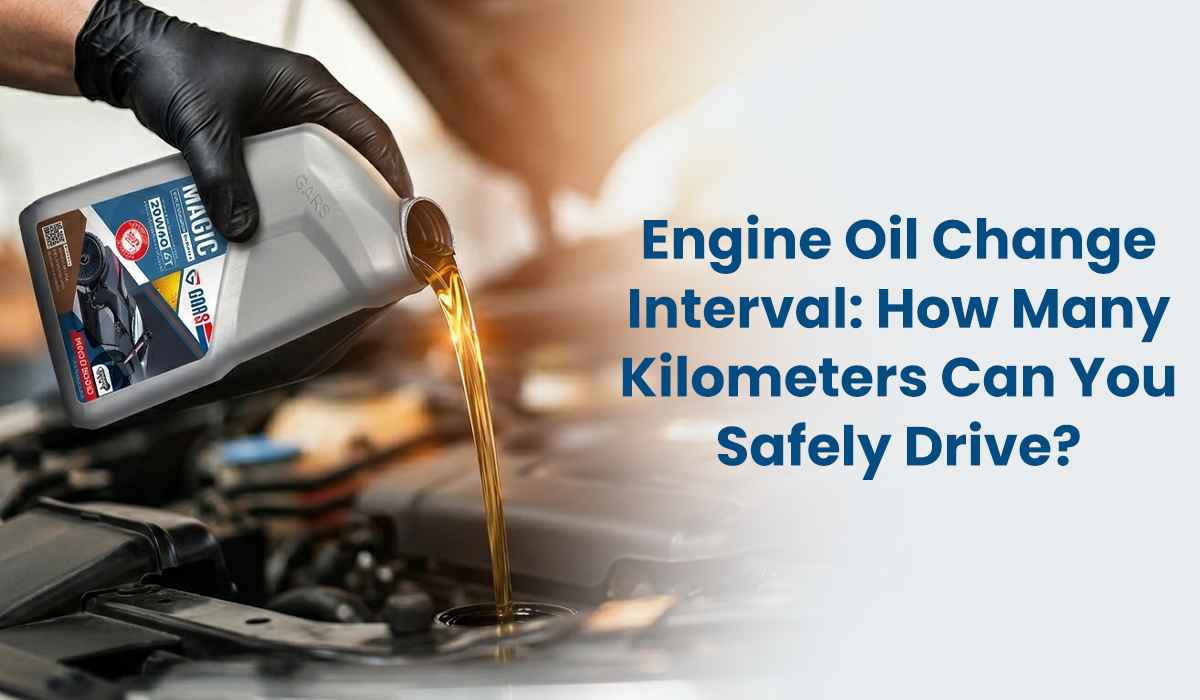
Engine Oil Change Interval: How Many Kilometers Can You Safely Drive?
How Far Can You Drive Before Reaching Your Engine Oil Change Interval?
The engine oil change interval is one of those things every driver puts off longer than they should. Some stretch it because nothing feels wrong. Others follow an old rule of thumb that no longer applies to their vehicle or oil grade. Both approaches cost more in the long run than a timely oil change ever would.How far you can safely drive before changing engine oil depends on three things: what grade of oil is in your engine, how and where you drive, and what condition your engine is actually in. Get those three right and the answer becomes clear.
What Happens to Engine Oil Over Time?
Engine oil does not just lubricate - it cleans, cools, and protects. Fresh oil moves freely, picks up heat, suspends contaminants, and keeps metal surfaces from grinding against each other. Leave it in too long and it thickens, loses its additive package, and starts working against the engine rather than for it.The degradation is gradual. You rarely feel it happening. But the wear it causes adds up - and by the time an engine starts knocking or consuming oil at an unusual rate, the damage is already done.
Not Sure How Often Your Engine Needs an Oil Change?
Engine Oil Change Interval by Oil Grade
The oil grade in your engine is the single biggest factor in determining how long you can go between changes:| Engine Oil Type | Recommended Change Interval |
|---|---|
| Mineral Oil | 5,000 – 7,000 km |
| Semi Synthetic Oil | 7,000 – 10,000 km |
| Fully Synthetic Oil | 10,000 – 15,000 km |
- Mineral Oil : Refined directly from crude - the most basic option and the one that needs the most frequent attention. Fine for older engines and light use, but heat breaks it down faster than the other grades. In hot Indian or UAE summers, stay at the lower end of that range.
- Semi Synthetic : A blend that performs noticeably better than straight mineral under heat and regular driving. The interval stretches further, and the oil holds its properties longer. For mixed city and highway driving, semi-synthetic is a practical middle ground.
- Fully Synthetic Oil Change Interval : This is where you get real distance between services. A quality fully synthetic oil change interval runs 10,000 to 15,000 kilometres under normal conditions - sometimes further when the manufacturer approves it. The oil is engineered to resist heat, oxidation, and degradation in ways that mineral and semi synthetic simply cannot match. For high mileage drivers and fleet operators, that extra distance per service adds up to meaningful savings over a year.
- Honda Civic Oil Change Interval : Honda specifies synthetic oil for the Civic with the onboard Maintenance Minder calculating the interval based on real driving conditions - typically 7,500 to 10,000 kilometres under mixed driving. Short city trips, heavy traffic, and hot ambient temperatures in Indian or UAE summers all shorten that window. When the Maintenance Minder flags a service, act on it rather than dismissing it.
What Actually Cuts Your Oil Change Interval Short
Following the recommended interval only works if your driving conditions match what that interval was designed for. Most people do not. City Driving : Short trips where the engine never properly warms up leave moisture in the oil. Stop-start traffic keeps the engine working harder than highway cruising at the same distance. If your daily commute runs through congested city roads - Mumbai, Delhi, Dubai, anywhere with heavy traffic - your oil is working harder than the odometer suggests. Heat : Vehicles operating in heavy traffic and high-temperature conditions experience faster oil degradation due to sustained engine heat. Compared to steady highway driving in moderate weather, these conditions place greater stress on the oil and can shorten its service life. Dusty Environments : Dust and airborne contaminants can enter the engine system over time, reducing oil quality and increasing wear on internal components. Vehicles frequently driven on dusty roads may require shorter oil change intervals. Towing and Heavy Loads: Every extra kilogram the engine carries generates more heat. If the vehicle works hard regularly - carrying loads, towing, or running fully laden - shorten the interval and do not wait for a warning sign.Signs the Oil Needs Changing Before the Interval Is Up
The engine will often flag a problem before the scheduled service date arrives. Pay attention to:- Oil on the dipstick that looks black, gritty, or unusually thick
- A faint burning smell from the engine bay during or after driving
- Engine running louder than normal - ticking or a low knock at idle
- Fuel consumption is creeping up without a clear reason
- Dashboard oil warning light - if this comes on, do not delay
What Pushing Past the Interval Actually Does
Driving well past the recommended change point is not a neutral decision. The consequences build over time:Sludge forms inside the engine as degraded oil thickens and sticks to internal surfaces. Oil passages narrow. Components that rely on a clean oil supply start running dry at the wrong moments. Bearings wear faster. Pistons run hotter. Fuel consumption rises as the engine compensates for increased internal friction. And eventually, something fails at a cost that dwarfs every oil change that was skipped to get there.
Three Common Myths That Catch Drivers Out
Every vehicle needs an oil change at 5,000 km : That number made sense for mineral oil in older engines. Modern synthetic oils and tighter engine tolerances have moved that ceiling significantly higher for many vehicles. Check your manufacturer's specification - not a decade-old workshop rule. Synthetic oil does not need changing : It lasts longer - it does not last forever. Heat and contamination still degrade synthetic oil over time. The interval is longer, not infinite. Dark oil means it is overdue : Oil darkens as it does its job - picking up combustion byproducts and keeping them in suspension rather than letting them coat engine surfaces. That darkening is normal. Thick, gritty, or sludgy oil is the real warning. Colour alone is not enough to go on.How to Maximize Your Engine Oil Change Interval
- Match the oil grade to what your manufacturer actually specifies - the wrong grade degrades faster regardless of its quality rating
- Change the oil filter with every oil change - a blocked filter sends unfiltered oil through a bypass and undoes the point of the fresh oil
- Check the dipstick monthly rather than waiting for a warning light
- Shorten the interval if your driving is mostly short urban trips or in extreme heat
- Source oil from a consistent industrial lubricant supplier - batch variation in oil quality directly affects how long it performs
Conclusion
Getting the engine oil change interval right comes down to knowing your oil grade, understanding your driving conditions, and paying attention to what the engine tells you between services. Mineral oil needs more frequent changes. Fully synthetic gives you real distance. Hot climates and city driving shorten every interval regardless of grade, and pushing past the recommended point always costs more than it saves.Use quality oil, change it when it needs changing, and source it from a supplier who maintains consistent standards batch after batch. That combination protects the engine and keeps maintenance costs predictable - which is exactly where they belong.
Gars Lubricants supplies engine oil across multiple grades for individual vehicles, workshops, and large fleet operations.
FAQ's
How many kilometers can I drive before changing engine oil?
Mineral oil around 5,000 to 7,000 km, semi synthetic 7,000 to 10,000 km, fully synthetic 10,000 to 15,000 km. Your manufacturer's specification takes priority over any general figure.Can I drive 10,000 km without changing engine oil?
On quality fully synthetic in normal driving conditions - yes. On mineral oil or in hot climates with city driving, that is too far. Check the oil condition rather than relying on distance alone.Does synthetic oil last longer than mineral oil?
Considerably. Fully synthetic resists heat and oxidation far better, which is why the interval stretches to 10,000 to 15,000 km compared to mineral oil's 5,000 to 7,000 km.What happens if I delay an oil change?
Sludge builds, wear accelerates, fuel economy drops, and eventually something fails. Repair costs always exceed what timely oil changes would have cost.How do I know when my engine oil needs changing?
Gritty or very dark oil on the dipstick, engine noise, a burning smell, rising fuel consumption, or the warning light coming on - any of these are signals worth acting on.Does hot weather affect engine oil life?
Directly. Heat is the main driver of oil degradation - vehicles in Indian or UAE summers need closer attention to oil condition than those in cooler climates.Should diesel engines change oil more often?
Yes, generally. Diesel combustion produces more by-products that contaminate oil more quickly – stick to the lower end of the recommended range, especially for short urban trips.Recent Post
Top Categories
Popular Products